

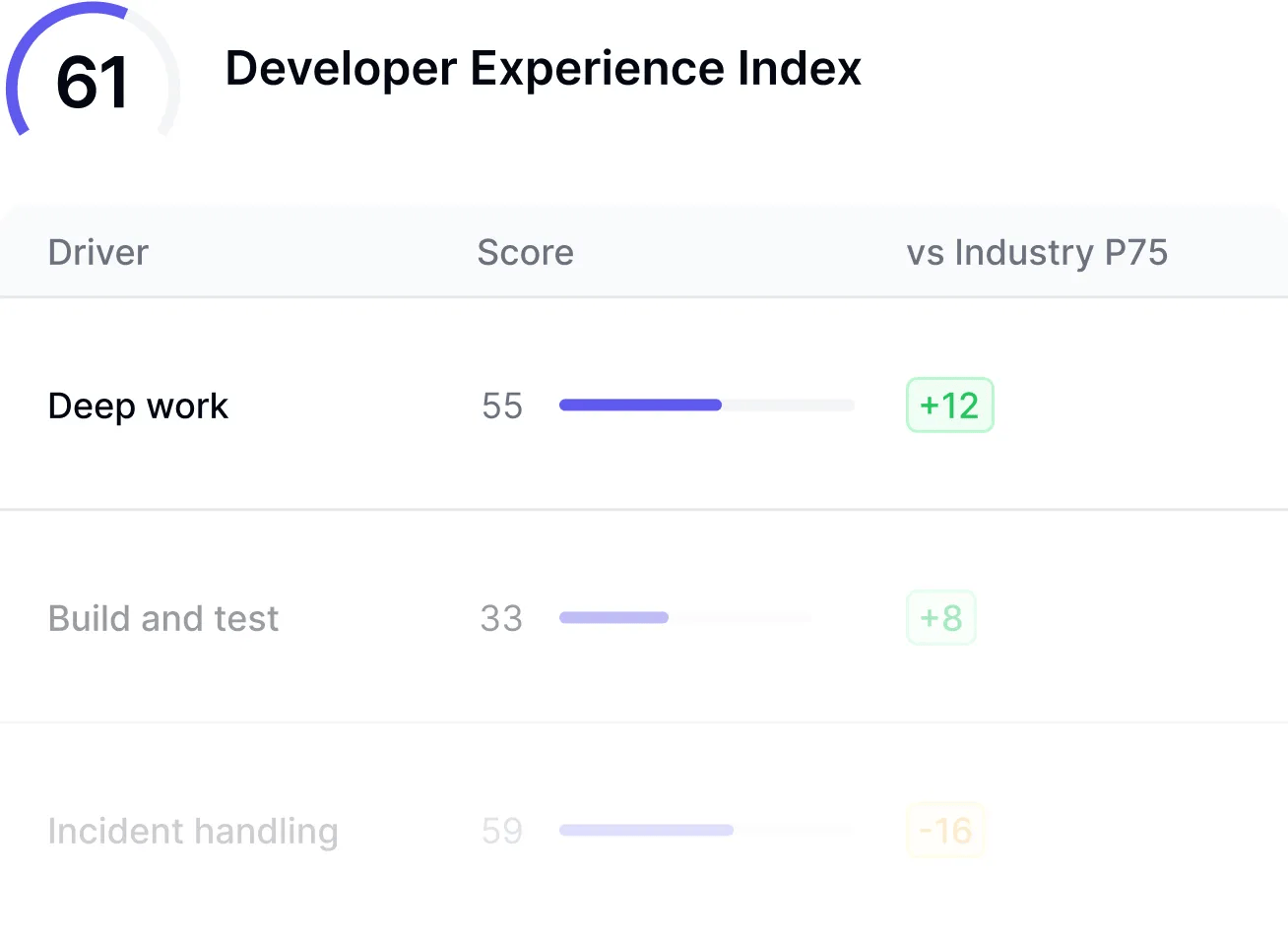


As an engineering manager, I’m pretty close to what’s working and what’s not, but it’s still easy to rely too much on gut feel. DX has been useful as a way to sanity-check my assumptions and see whether changes we make are improving things over time.
The snapshot feedback is the most practical part for me. It’s quick for the team to respond to and gives me timely input I can actually act on. When we’ve tweaked sprint expectations, on-call rotations, or delivery process, the feedback has helped confirm whether those changes reduced friction or introduced new issues. Review collected by and hosted on G2.com.
It took a little time for the team to trust what the metrics represent, and I’m careful not to overreact to short-term swings. DX doesn’t replace 1:1s, retros, or just paying attention day to day. Review collected by and hosted on G2.com.
Andrew—it’s great to hear that snapshots are helping to confirm whether process changes are actually reducing friction. We completely agree that the data is best used alongside 1:1s and retros to give a full picture of team health and help your engineers feel heard.