What problems is Adobe Analytics solving and how is that benefiting you?
Adobe Analytics is a powerful tool that solves several key problems for businesses, especially those focused on digital marketing and customer insights. Here's a breakdown of the problems it addresses and how it benefits users:
1. Understanding Customer Behavior
Problem: Businesses struggle to get clear insights into how customers interact with their websites, apps, or digital properties.
Solution: Adobe Analytics provides deep insights into customer behavior, tracking things like page views, user journeys, bounce rates, and conversion paths. It collects data from multiple touchpoints, giving companies a clear picture of user interactions and preferences.
Benefit: This allows businesses to personalize experiences, improve customer journeys, and optimize website or app performance based on real-time data.
2. Data Integration and Segmentation
Problem: Many businesses have fragmented data sources, making it difficult to get a unified view of customer behavior and preferences.
Solution: Adobe Analytics integrates data from various platforms (web, mobile, social, CRM, etc.) into a centralized dashboard. It also allows for segmentation, so companies can isolate different customer groups and tailor marketing efforts.
Benefit: This integration provides a more holistic understanding of customer actions, leading to more effective marketing campaigns and better-targeted content.
3. Real-Time Analytics
Problem: Traditional analytics tools may provide delayed reports, making it harder for businesses to react to changes in customer behavior or campaign performance.
Solution: Adobe Analytics offers real-time data processing, which means businesses can access up-to-the-minute insights on website traffic, campaign success, and user activity.
Benefit: Real-time insights enable businesses to quickly adjust strategies, fix issues, and capitalize on opportunities as they arise, improving overall responsiveness and agility.
4. Advanced Reporting and Customization
Problem: Standard reporting tools may not offer the depth of analysis needed to make informed decisions, especially for complex campaigns or unique business needs.
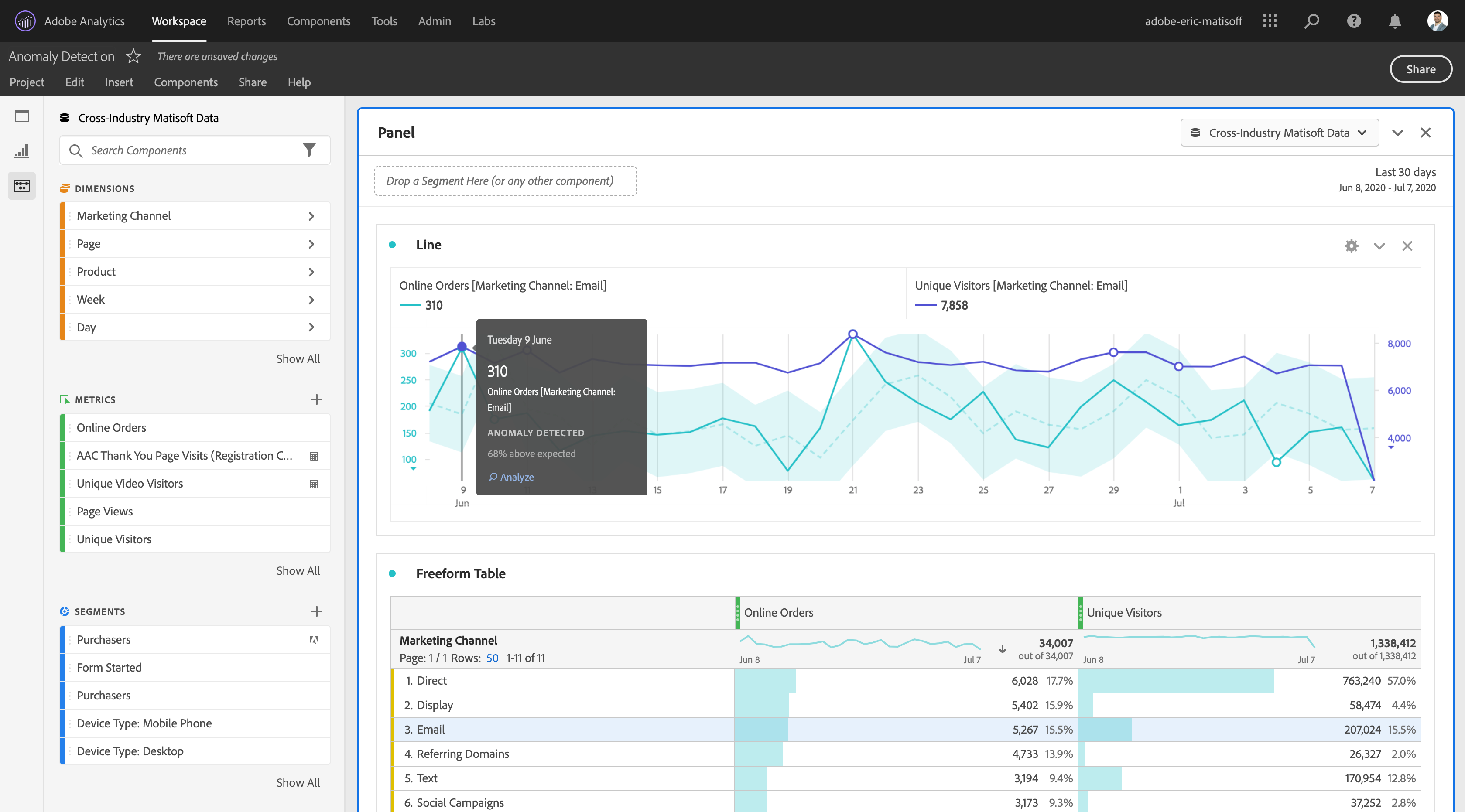
Solution: Adobe Analytics provides advanced reporting and allows for custom dashboards and visualizations, enabling businesses to focus on the metrics that matter most to them.
Benefit: The ability to customize reports helps businesses dig deeper into specific areas of interest and extract actionable insights, leading to better decision-making.
5. Attribution and ROI Measurement
Problem: Accurately attributing sales or conversions to specific marketing efforts or touchpoints is a common challenge.
Solution: Adobe Analytics offers robust attribution modeling, which helps businesses understand the true impact of their marketing efforts across different channels and touchpoints.
Benefit: This clarity helps businesses allocate budgets more effectively, improve marketing strategies, and ultimately boost return on investment (ROI).
6. Predictive Analytics and Insights
Problem: Businesses often react to data rather than proactively predicting trends and customer behavior.
Solution: Adobe Analytics incorporates machine learning and AI capabilities to offer predictive insights, helping businesses anticipate future customer actions and market shifts.
Benefit: Predictive analytics empowers businesses to be more proactive in their decision-making, identifying trends and potential opportunities before they occur.
7. Cross-Channel Insights
Problem: Customers interact with brands across multiple channels, and understanding their journey across these touchpoints is complex.
Solution: Adobe Analytics can provide cross-channel insights, enabling businesses to track and analyze user behavior across web, mobile, social media, email, and more.
Benefit: This gives businesses a complete view of the customer journey, which allows for more effective cross-channel marketing and consistent brand experiences.
How does this benefit users?
For marketers: It allows them to optimize campaigns, target the right audience, and measure the success of different channels, ultimately improving ROI.
For UX/UI designers: They can use the data to understand how users navigate a site or app and improve the user experience based on real customer feedback.
For business executives: Adobe Analytics provides actionable data that can inform strategic decisions, helping businesses scale and grow efficiently.
For data scientists and analysts: It offers powerful tools for data analysis, segmentation, and predictive modeling, making it easier to derive insights and communicate findings effectively.
Ultimately, Adobe Analytics helps organizations become data-driven by providing actionable insights that enhance customer experience, increase operational efficiency, and optimize marketing efforts. Review collected by and hosted on G2.com.