O que você mais gosta Slack?
What I like best about Slack is how effectively it brings communication and collaboration into one streamlined platform.
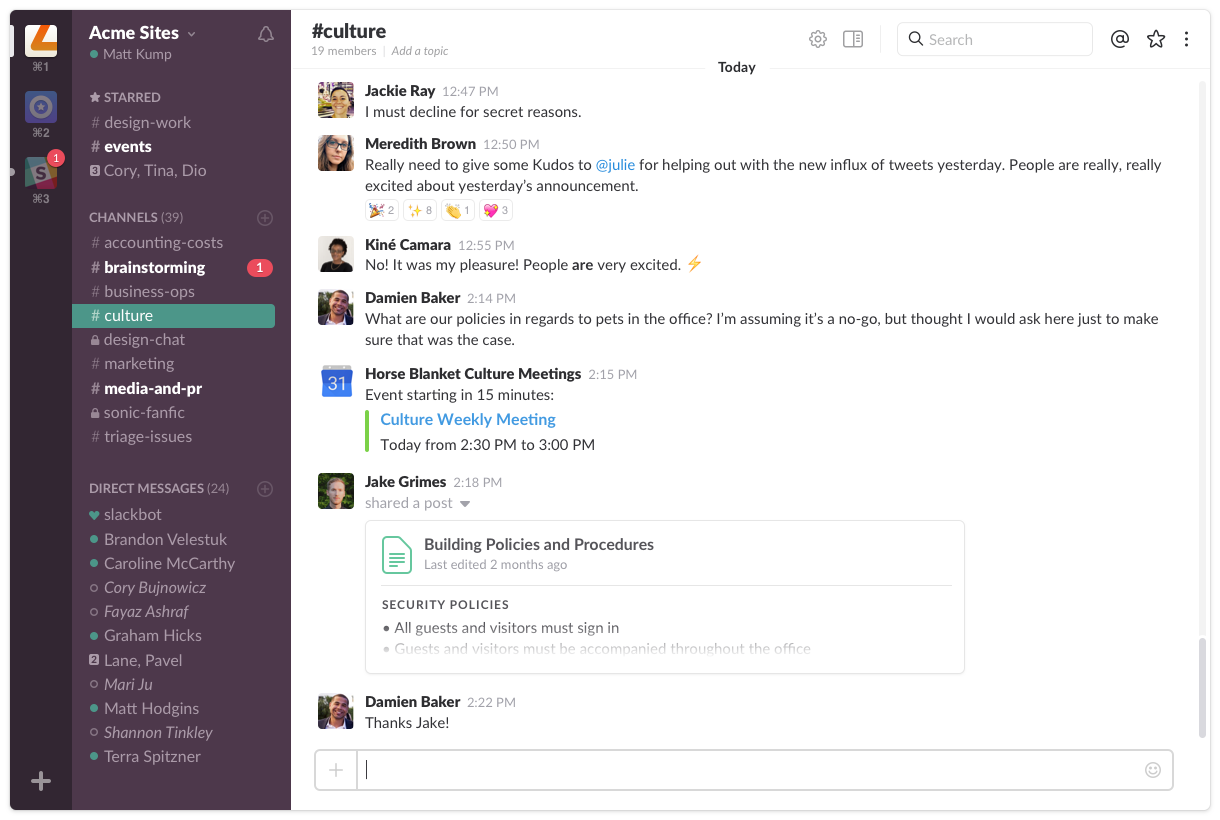
From a UI/UX perspective, Slack has a clean, intuitive interface that makes it easy to organize conversations through channels, threads, and direct messages. It reduces clutter and helps keep discussions structured, especially in larger teams.
In terms of integrations, Slack is extremely powerful. It connects seamlessly with tools like Google Drive, Jira, GitHub, Zoom, and many others, allowing me to manage work and receive updates without constantly switching between apps.
On performance, it’s generally fast and reliable, with real-time messaging and notifications that keep teams in sync. Even with large volumes of messages, it maintains good responsiveness.
From a pricing/ROI standpoint, while the free version is useful, the paid plans unlock valuable features like message history, advanced search, and integrations, which significantly improve productivity and justify the cost for teams.
Regarding support and onboarding, Slack is easy to get started with. The setup is simple, and new users can quickly adapt due to its familiar chat-based approach. There’s also plenty of documentation and community support available.
For AI/Intelligence, Slack has been evolving with features like message summarization, search enhancements, and workflow automation. These help reduce information overload and save time by surfacing relevant insights and automating repetitive tasks. Análise coletada por e hospedada no G2.com.
O que você não gosta Slack?
What I dislike about Slack is that, despite its strengths, it can become overwhelming and less efficient at scale.
From a UI/UX perspective, the interface can get cluttered with too many channels, threads, and notifications, making it hard to keep track of important conversations. Threaded replies, while useful, are sometimes easy to miss.
In terms of integrations, although Slack supports many tools, excessive integrations can lead to notification overload and noise if not carefully managed.
On the performance side, Slack can become resource-heavy, especially on desktop, and may slow down when handling large workspaces or long message histories.
From a pricing/ROI standpoint, the cost can add up quickly for growing teams, and limitations in the free plan—like restricted message history—can be a drawback for long-term use.
Regarding support and onboarding, while basic onboarding is easy, managing large teams, permissions, and channel structures can become complex over time.
For AI/Intelligence, although Slack is improving in this area, AI features are still evolving and not always deeply integrated into daily workflows, so their practical impact can feel limited in some cases. Análise coletada por e hospedada no G2.com.