
Latency was the first thing that got me. It's fast enough to feel natural, which is non-negotiable for real phone calls, but also slow enough for difficult conversations allowing the caller to take a beat, if needed. On top of that, it actually stays on script. That sounds simple, but most AI voice tools fall apart there. In my industry (and most others) this is paramount. Bland lets me focus on building my application instead of reinventing the wheel. I've essentially been able to leverage a full team of engineers to handle the hard stuff like call infrastructure and model tuning, which I have zero interest in rebuilding myself. I tried that and didn't enjoy it. Compared to everything else in the space, it's just more reliable, more controllable, and less gimmicky. I've been a cheerleader for Bland since day one. They keep improving, and I get to benefit from that without constantly reworking my stack. Plus they're just so cool. Review collected by and hosted on G2.com.
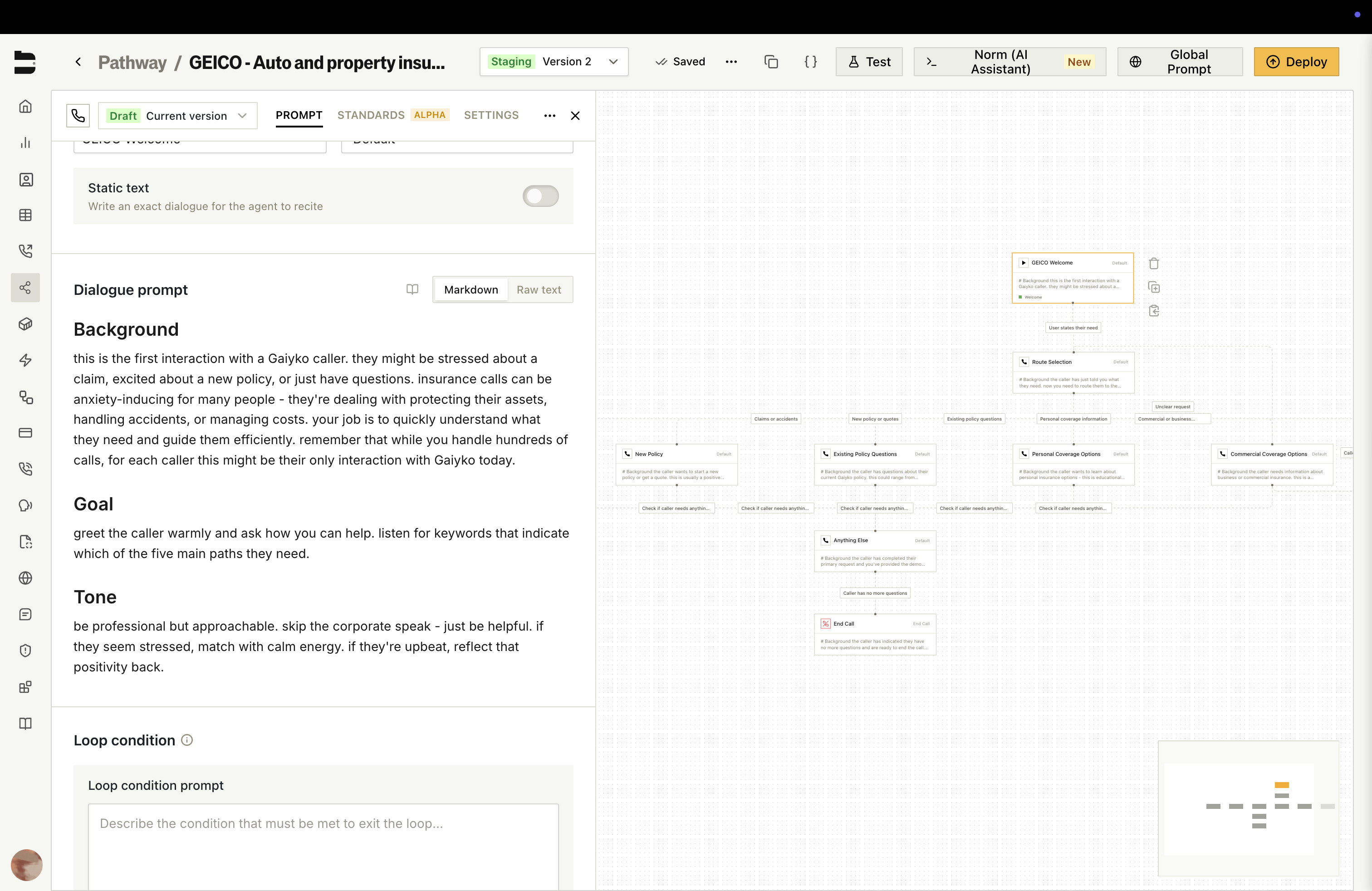
Like any fast-moving platform (AI, duh), things can change quickly, which is great for innovation but sometimes means keeping up with updates and adjustments on your end. If you're building something in production, you have to stay on top of those changes. There is a learning curve if you actually want to do more than basic use cases. It's kind of a mental shift. Bland gives you a lot of control, which is a strength, but it means you need to think through your conversational design and logic instead of expecting it to just magically work out of the box. That said, these aren't dealbreakers, they're more the tradeoff of using a platform that's evolving quickly and capable of handling real-world complexity. They are doing it right though. Review collected by and hosted on G2.com.