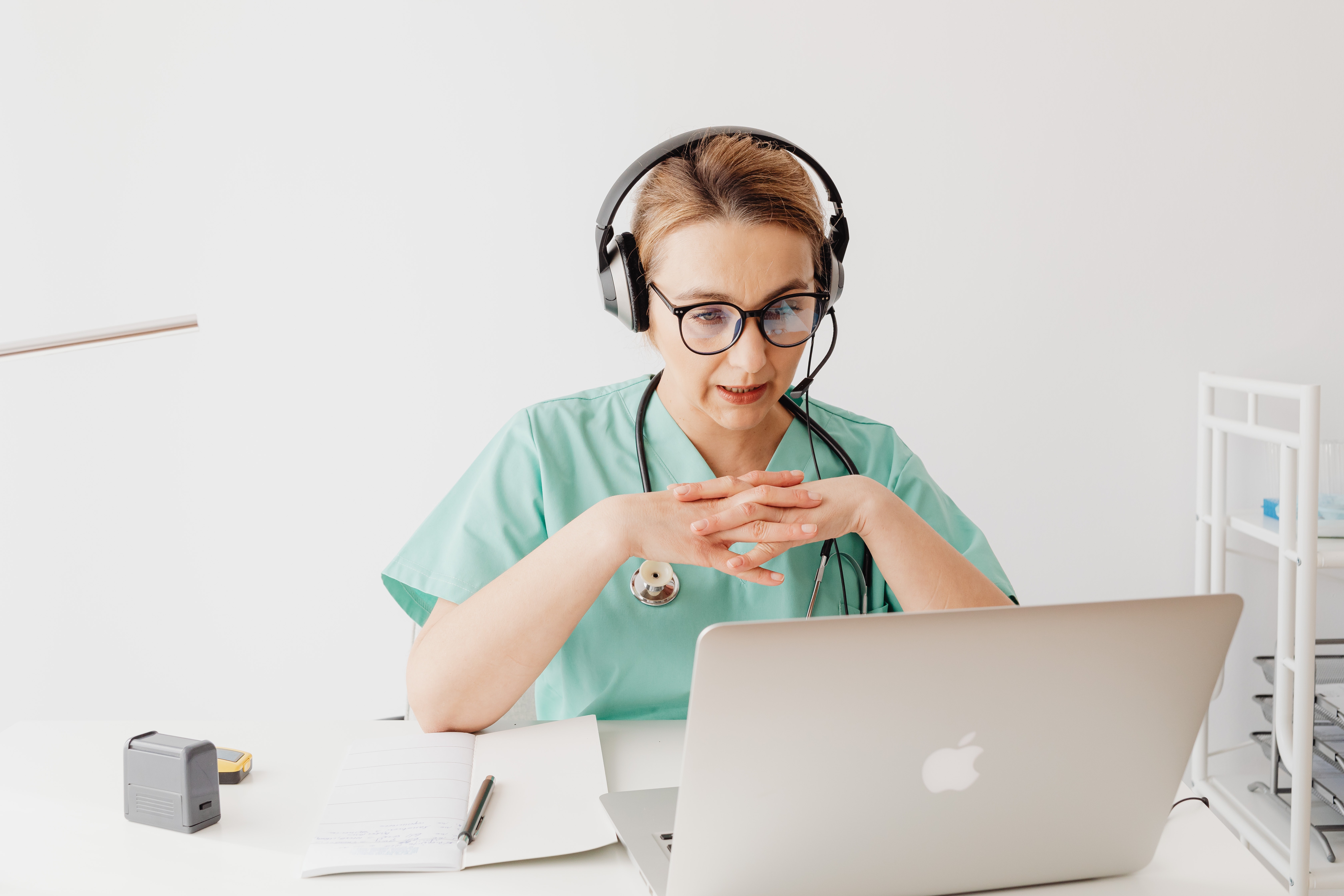





At the onset of the pandemic, the Association of American Medical Colleges decided to suspend clinical rotations and issued guidance for medical students to avoid activities involving direct patient contact. As we continued to learn more about COVID-19, the subsequent social distancing measures resulted in continuous disruption of the routines of medical students, schools, and institutions. While clinical rotations and residencies are still on hold through August, it looks like they will return in 2021.
Healthcare LMS software allow learning to continue
What is Healthcare LMS Software?
Healthcare LMS software, or healthcare learning management systems, enable medical organizations and institutions to provide continued education, training, and accreditation to their employees in a cost effective and efficient manner.
Healthcare professionals and students leverage these platforms for course work and training, and to keep up with changing healthcare guidelines, evolving medical technology, and updated standards and procedures. These platforms were essential throughout the pandemic as students, professors, and healthcare professionals were able to stay connected and receive updates and training.
G2 has noticed a significant increase in traffic to the Healthcare LMS software category. Within the last 12 months, the category traffic has increased by over 460%, which shows buyers are exploring online learning tools to respond to the shifts in medical education that occurred during the pandemic.

Rethinking the principles of medical education during a time of disruption
Here are three ways the pandemic has shifted medical education:
Front-line clinical experience
In many cases, medical students were given the opportunity for a hands-on clinical experience much earlier in their medical education. Given the need for increased patient care, they were tasked with learning how to treat COVID-19 patients along the guides of rapidly-changing protocols.
At the beginning of the pandemic, there was a heightened sense of fear and anxiety due to the unknowns of the virus and how to treat it. Students and clinicians were learning together, removing some of the mentor-mentee relationship that exists within medical education.
Emphasis on public health
In response to the COVID-19 pandemic, medical schools created additional electives that focus on public health response, covering topics like disease management, epidemiology, and contagion, such as SARS, MERS, H1N1, Ebola. The pandemic has strengthened the relationship between healthcare delivery systems and public health professionals.
The COVID-19 pandemic prompts people to reframe their idea of what it means to alleviate suffering, improve quality of care, and improve the health of our communities.
It requires everyone, from doctors and nurses to public health and policy experts, to solve the problems. This all-hands approach could be applied to other public health crises, such as the opioid epidemic and the ongoing pandemic of health care disparities.
Real-time curriculum changes
The pandemic’s onset was a teachable moment for any health professional. The quick changes to medical education during the pandemic can be adapted going forward to create more accessible and equitable medical education opportunities.
With clinical rotations on hold, medical schools have had to find creative alternatives—learning and growth through virtual clinical observation, training via medical simulation, and utilizing healthcare LMS to engage with students and practitioners.
Medical schools use technology to cope with curriculum changes
- Virtual clinical observations allow students to connect with onsite healthcare providers and observe them as they assess patients, conduct consultations, prescribe medication, document clinical interactions with patients, and more.
- Medical simulation provides continued education, training, and accreditation to their employees in an efficient and safe manner. The simulations helped students and practitioners keep up with changing healthcare guidelines around COVID-19.
- Healthcare LMS allows students to learn on their own schedule with pre recorded video lectures and exams within the system. Further, access to teaching with medical experts has enabled students to remain on top of the latest medical advancements and gain additional knowledge lost due to the cancellation of clinical rotations.
Final thoughts
Continuing to teach through the pandemic enabled medical students' ongoing education and helped prepare them to provide patient care during the pandemic.
| Related: The Impact of the COVID-19 Pandemic on Global Education → |
Although medical schools were able to respond by continuing to educate students and provide frontline learning opportunities, the mental well being of students was negatively affected during the pandemic. It will be interesting to see if medical schools shift to a more holistic approach so there is a better balance between education, hands-on learning, and mental health.
Want to learn more about Patient Relationship Management (PRM) Software? Explore Patient Relationship Management (PRM) products.

Rachael Altman
Rachael is a research analyst at G2 with a focus on healthcare and education. Prior to joining G2, she has worked as an academic librarian and in research and business development at law firms, accounting firms, and nonprofit organizations. She has a BA and MA in English and Creative Writing and an MS in Library & Information Science. Outside of G2, Rachael is a career coach, yoga and meditation teacher, and jewelry maker.


